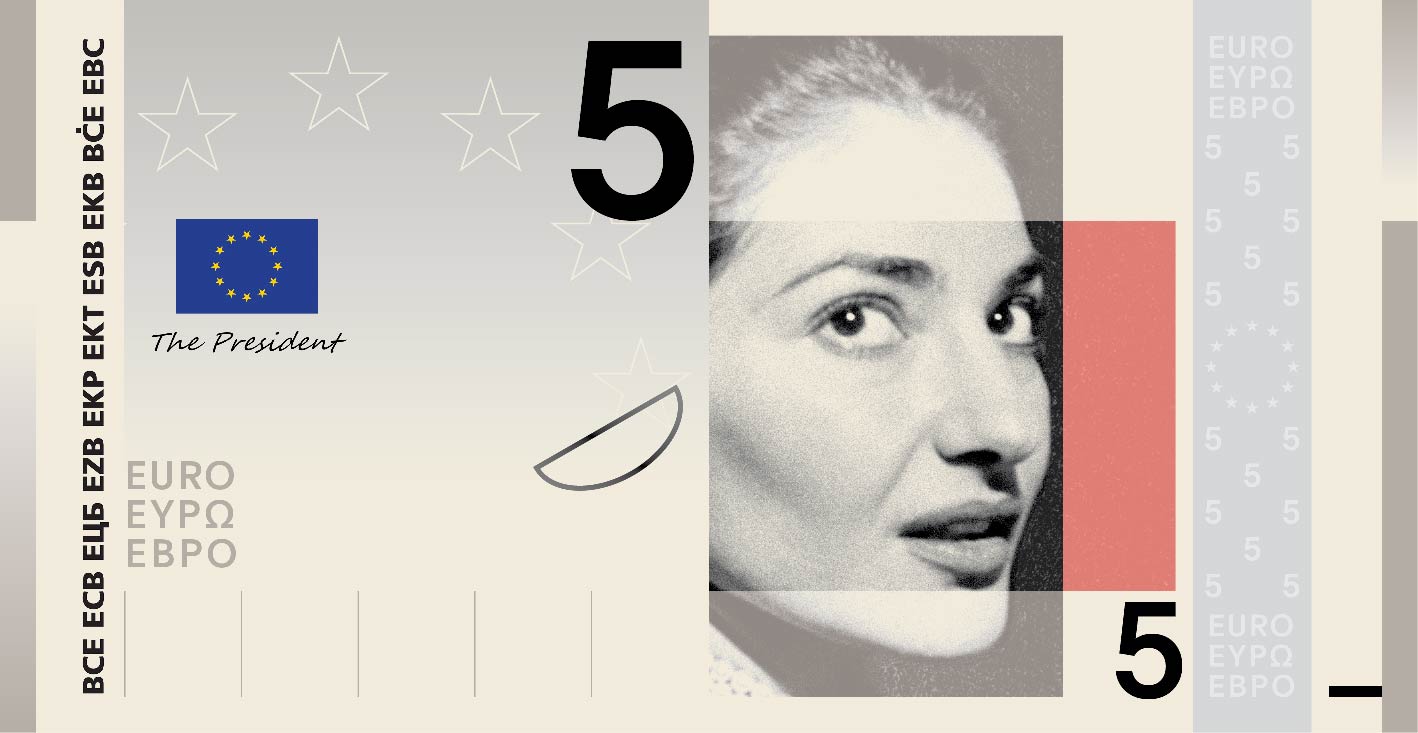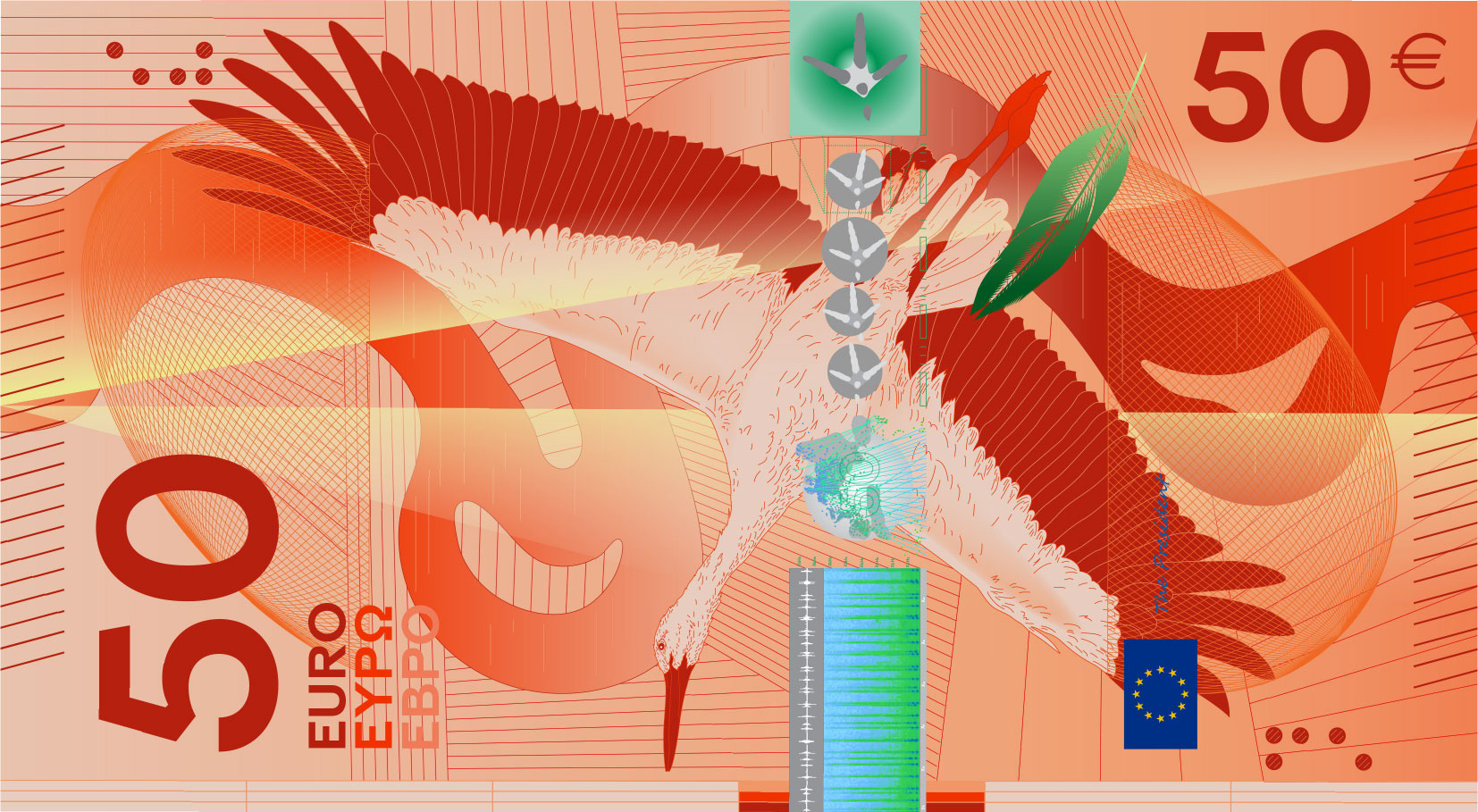
Design E is the European culture proposal that stays closest to the visual conventions of existing banknotes. It comes from Myrsini Vardopoulou, a Greek artist whose professional life has been spent designing small, densely engraved objects.
| Design letter | E |
|---|---|
| Theme | European culture |
| Designer | Myrsini Vardopoulou |
| Based in | Athens, Greece |
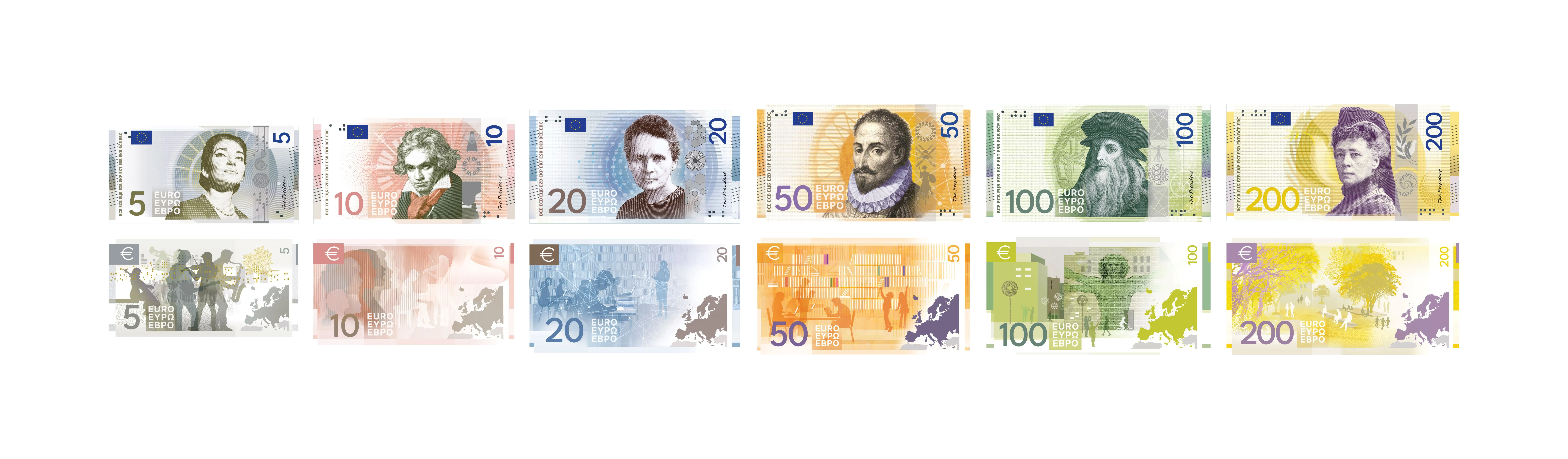
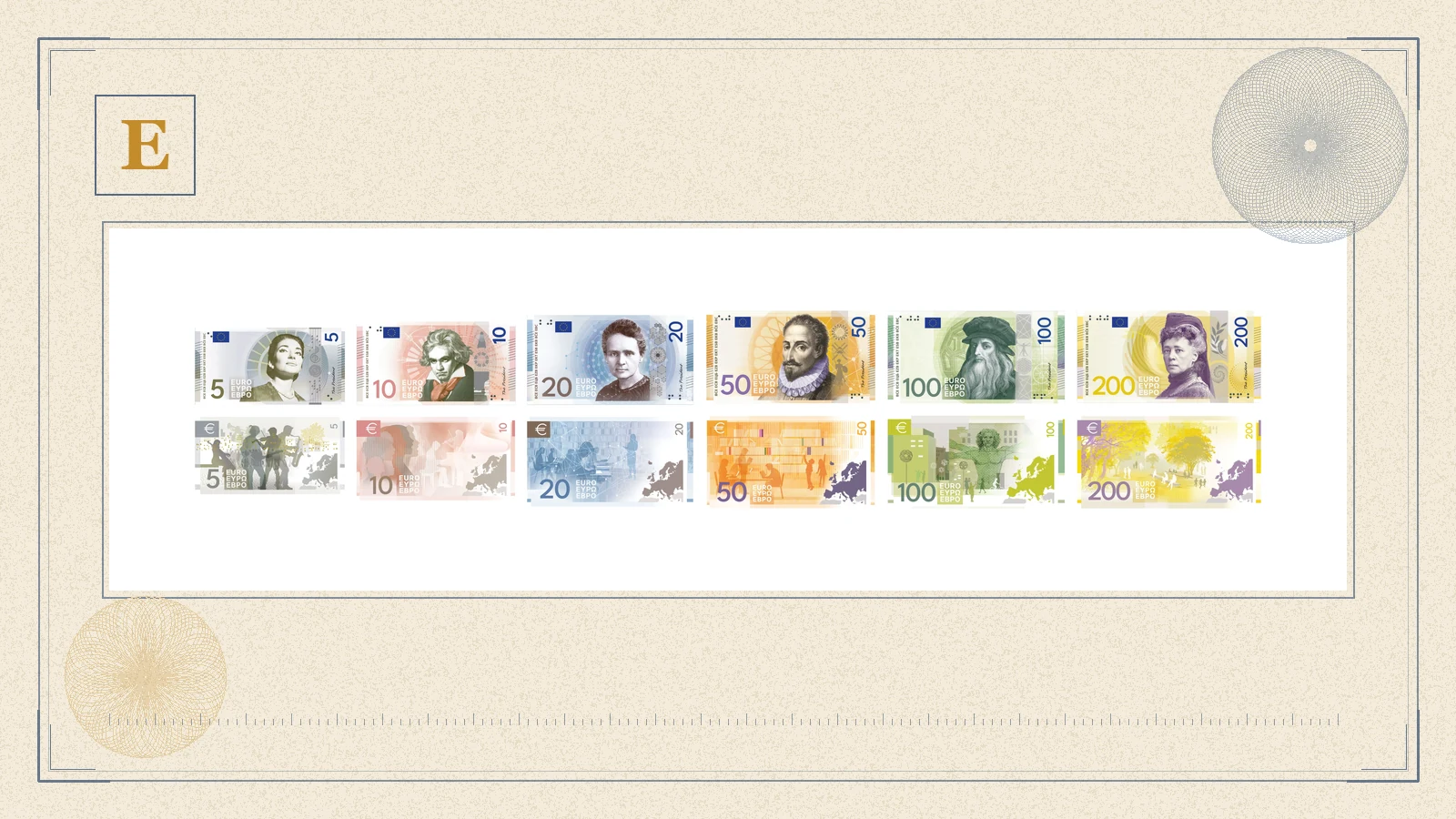
Design E — Myrsini Vardopoulou. Complete family of six denominations, fronts and reverses. Design proposal only: it does not show an issued or approved euro banknote.
Who she is
Vardopoulou was born in Athens in 1964 and studied painting and engraving at the Athens School of Fine Arts, graduating in 1993 and 2001. Since 1995 she has designed stamps and philatelic products for ELTA, the Greek postal service, and overseen their production. She is an honorary member of the European Academy of Philately and has been working towards a doctorate at Panteion University in Athens.
That background matters here: stamp design and banknote design share the same constraints of scale, engraving and legibility at very small sizes.
What the proposal shows
Each of the six cultural figures is placed at the centre of the note and surrounded by circles, signs and references drawn from their own work, so that the ornament carries meaning rather than decoration. The palette is pastel and the line work is clean, which the ECB’s description characterises as a classical and carefully considered interpretation.
The family deliberately preserves continuity with the euro banknotes now in circulation, in typography and in the general arrangement of the front. Among the ten shortlisted proposals it is the one that would look least like a break if it were issued.
Where it sits in the process
Published on 23 July 2026 with the other nine families, Design E was submitted to a public survey that closed on 21 September. The final decision rests with the ECB Governing Council and is expected around the end of 2026.