0 euro notes are an interesting initiative introduced as souvenirs and collectibles. These notes have no monetary value and cannot be used to make payments. They are printed with the same security features as regular euro banknotes, but carry a face value of zero. The idea behind 0 euro notes is to promote tourism and culture, often featuring images of monuments, works of art or historical events connected to a specific locality.
A documented example
The first 0 euro note dates to 2017 and paid tribute to the German city of Kiel. Its front featured the vessel Gorch Fock II, housed in a museum in the city, while its back depicted some of the most important European monuments. Many other similar 0 euro notes have since been produced for collectors, all sharing a common reverse design.
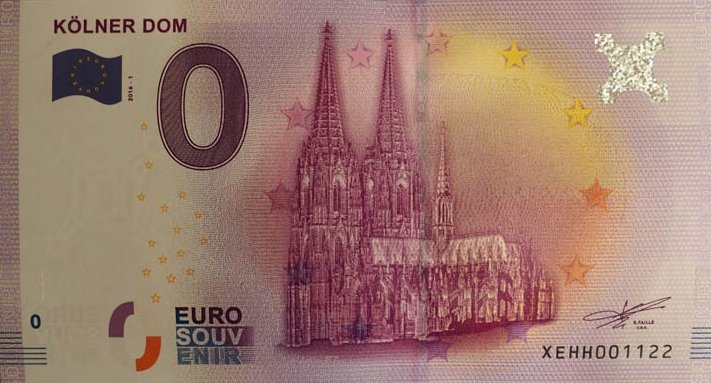
Cologne Cathedral 0 euro souvenir note, 2016. The visible denomination is zero and the note is sold as a collectible, not as money.
All 0 euro notes are printed in limited editions by Oberthur Fiduciaire, a French company active since 1842 that produces some of the ECB’s euro banknotes.
An Italian example: the Cartamoneta.com souvenir
The same format is also used in Italy. The Cartamoneta.com 0 euro souvenir note belongs to the international “Euro Souvenir” family: the same substrate, the same banknote-inspired dimensions, the same face value of zero. The motif draws on the Trinacria and a head of Medusa, with the Cartamoneta.com brand clearly displayed.
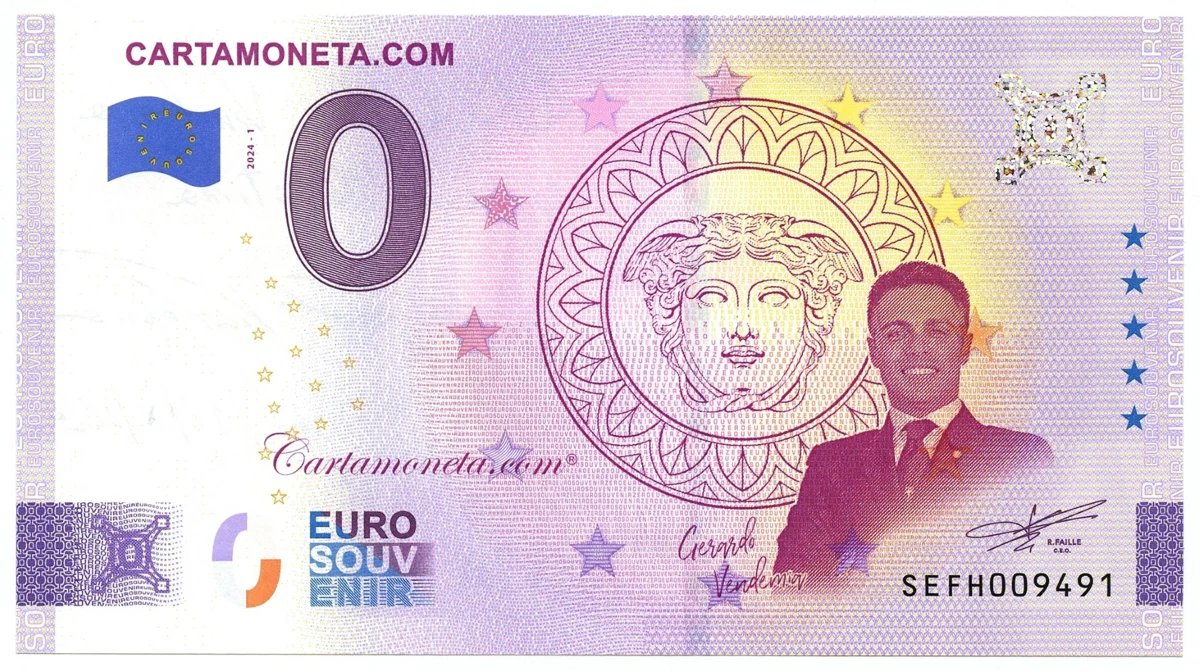
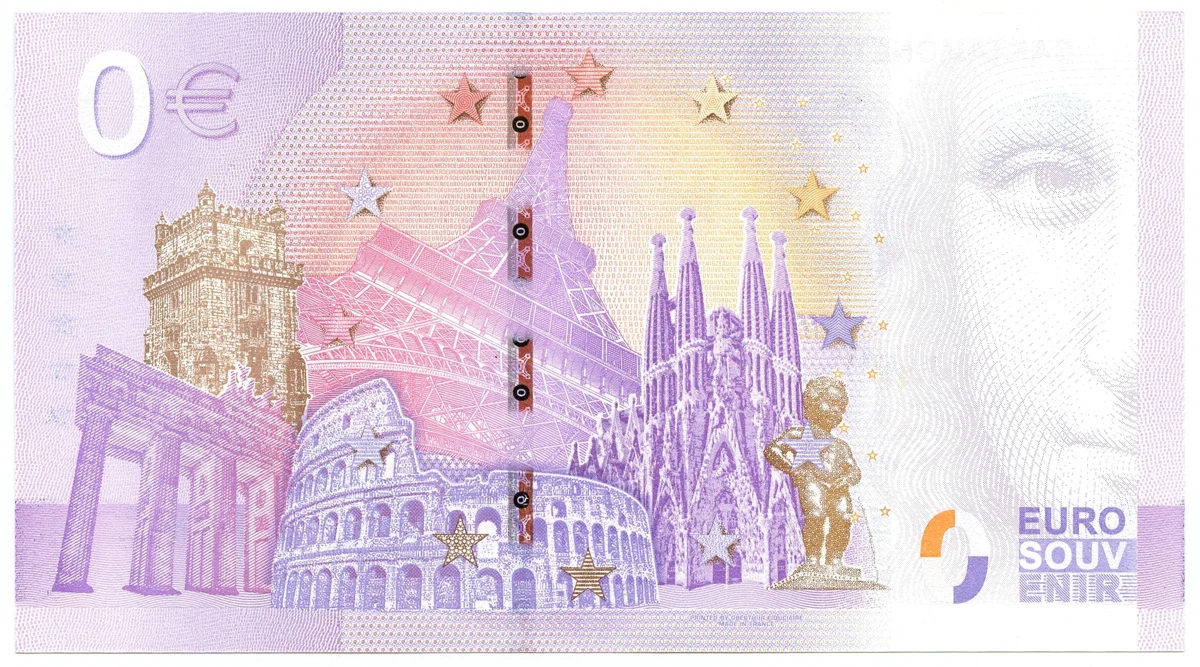
The Cartamoneta.com 0 euro souvenir note, a zero-face-value “Euro Souvenir”. It is a collectible, not a legal-tender banknote.
For collectors, 0 euro notes can be attractive because they combine security-print aesthetics with local subjects. They should still be catalogued with caution. They are not ECB-issued denominations, not legal tender and not a back door into a hidden euro banknote series.
The reproduction question
Banknote-like souvenirs also remind us why reproduction rules matter. The ECB allows the use of euro banknote images under defined conditions, but the rules are designed to ensure that the public can distinguish genuine banknotes from reproductions.
The safest reading rule is simple. If an object was not issued by the ECB or a national central bank of the Eurosystem as a euro banknote, treat it as a souvenir or reproduction, however careful and attractive its design may be.

