Bundesdruckerei is the German state security printer, based in Berlin. It shares the German euro banknote allocation with the private printer Giesecke+Devrient, and it is the rare case of a works that kept the same production-code letter, R, across both euro series.
| Country | Germany |
|---|---|
| Printing site | Berlin |
| First-series printer letter | R |
| Europa-series printer letter | R |
| Europa-series control number | 8 |
| Status | Active |

The Bundesdruckerei in Berlin, one of the two German works that print euro banknotes.
From the Reichsdruckerei to the euro
The house traces its origins to the imperial state printing office founded in Berlin in 1879, and it has produced German paper money, stamps and identity documents through every political regime since. It printed Deutsche Mark notes for the Bundesbank and was commissioned in 1999, alongside Giesecke+Devrient, to print the German share of the first euro series.
Today the company presents itself primarily as a security-technology group — passports, identity documents, digital credentials — with banknote printing as one line of a broader business.
One letter across two series
Most works changed letters when the Europa series reorganised the production code. Berlin did not: R in the first series, R in the Europa series, with control number 8. That continuity is convenient in practice, because a German-printed note can be recognised from the same initial letter regardless of series.
The second German plant, Giesecke+Devrient, took the opposite path: a single first-series letter P split into two Europa letters, W for Leipzig and X for Munich.
Reading the code on a note
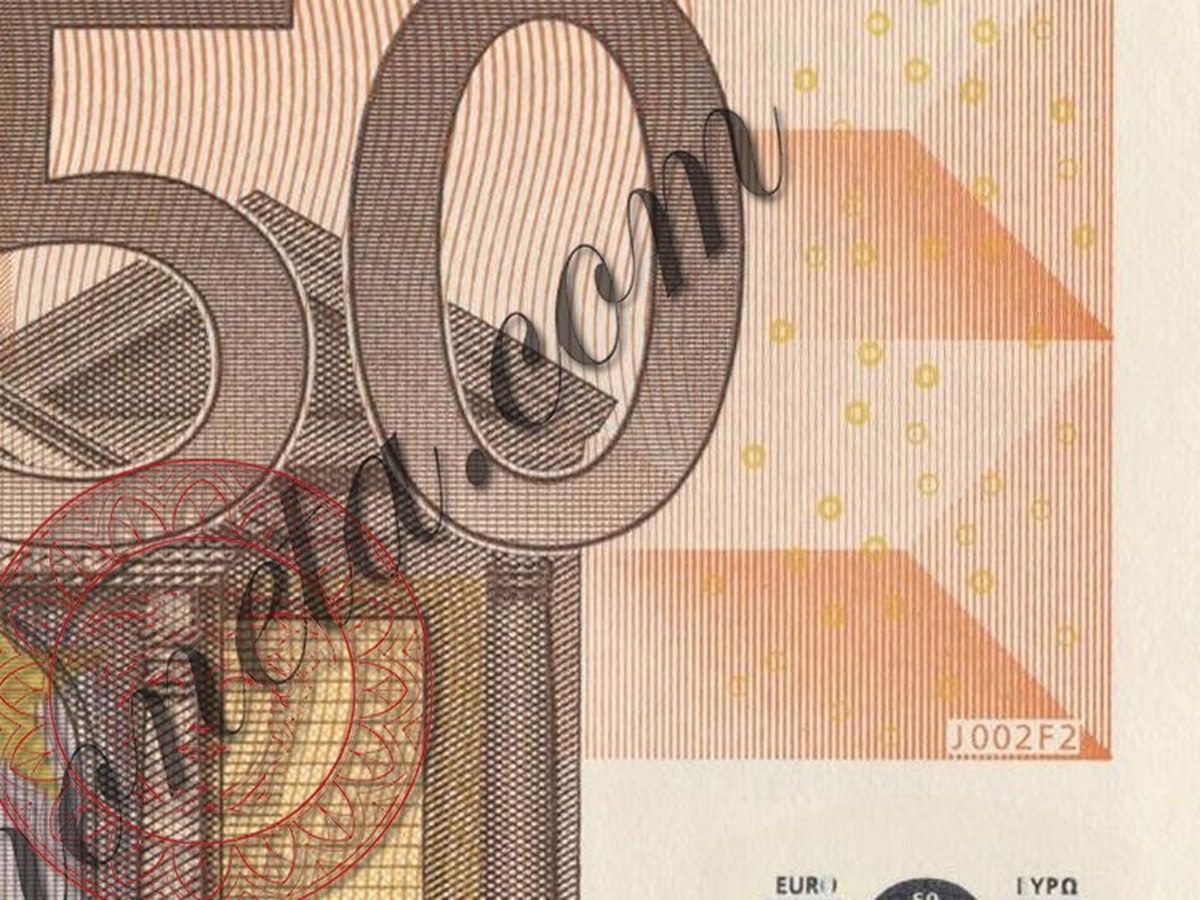
Look for the short production code printed away from the serial number. If it opens with R, the sheet was printed in Berlin. The rest of the code gives the plate number and the sheet position, as described in printing offices and printer codes.