Oberthur Fiduciaire is a privately owned French security printer with roots going back to 1842. It prints euro banknotes at Chantepie, on the edge of Rennes, and at a second plant opened in Sofia in 2013 — the only private company running two banknote factories inside Europe.
| Country | France and Bulgaria |
|---|---|
| Printing site | Chantepie, near Rennes; Sofia |
| First-series printer letter | E |
| Europa-series printer letter | E (Chantepie) · F (Sofia) |
| Europa-series control number | 3 (E) |
| Status | Active |

The historic Oberthur printing works in Rennes. Banknote production now runs at Chantepie, on the edge of the city, and at the company’s Sofia plant.
A private printer inside a public system
Most euro banknotes come from central-bank works. Oberthur is one of the accredited private houses that compete for Eurosystem tenders alongside them, and it has printed euro notes since the first series. The group also operates a banknote paper mill in the Netherlands, which lets it supply substrate as well as printing.
Its Bulgarian plant was built before Bulgaria itself adopted the euro, as an export-oriented factory. When Bulgaria joined the euro area in 2026, the country already had an ECB-accredited banknote works on its territory.
Letters E and F
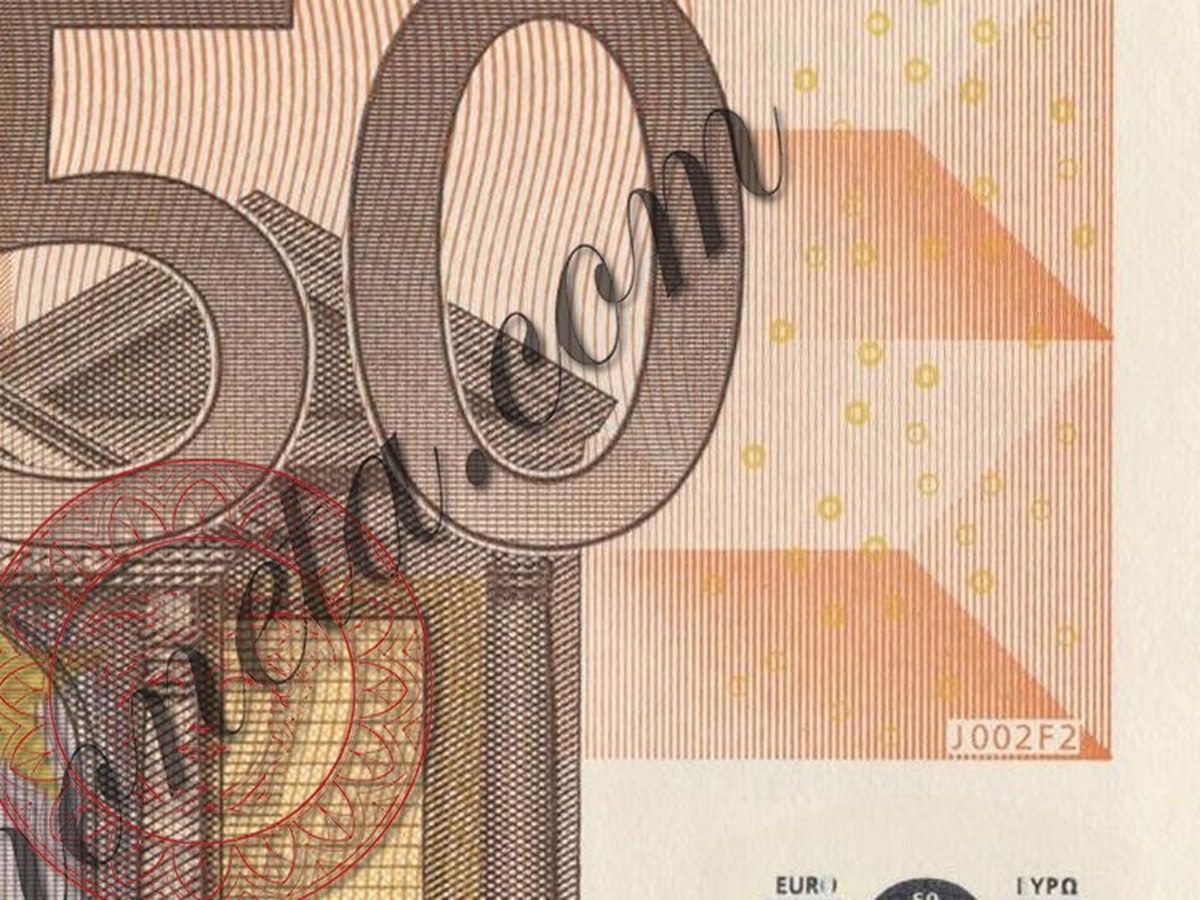
Chantepie kept the letter E from the first series into the Europa series, where its control number is 3. The Sofia plant received the separate Europa letter F. Because the two sites belong to the same company but are listed separately in the ECB’s production code, a note printed by Oberthur can carry either letter depending on the factory.
Reading the code on a note
The production code is short and set apart from the serial number. An opening E points to Chantepie, an opening F to Sofia. The rest of the code, and the way the letters were reassigned between the two series, is explained in printing offices and printer codes.