Design A is one of the five European culture proposals shortlisted by the ECB on 23 July 2026. It comes from Studio Joost Grootens, a Dutch practice better known for atlases and information design than for currency.
| Design letter | A |
|---|---|
| Theme | European culture |
| Designer | Studio Joost Grootens |
| Based in | Amsterdam, Netherlands, and Biel/Bienne, Switzerland |

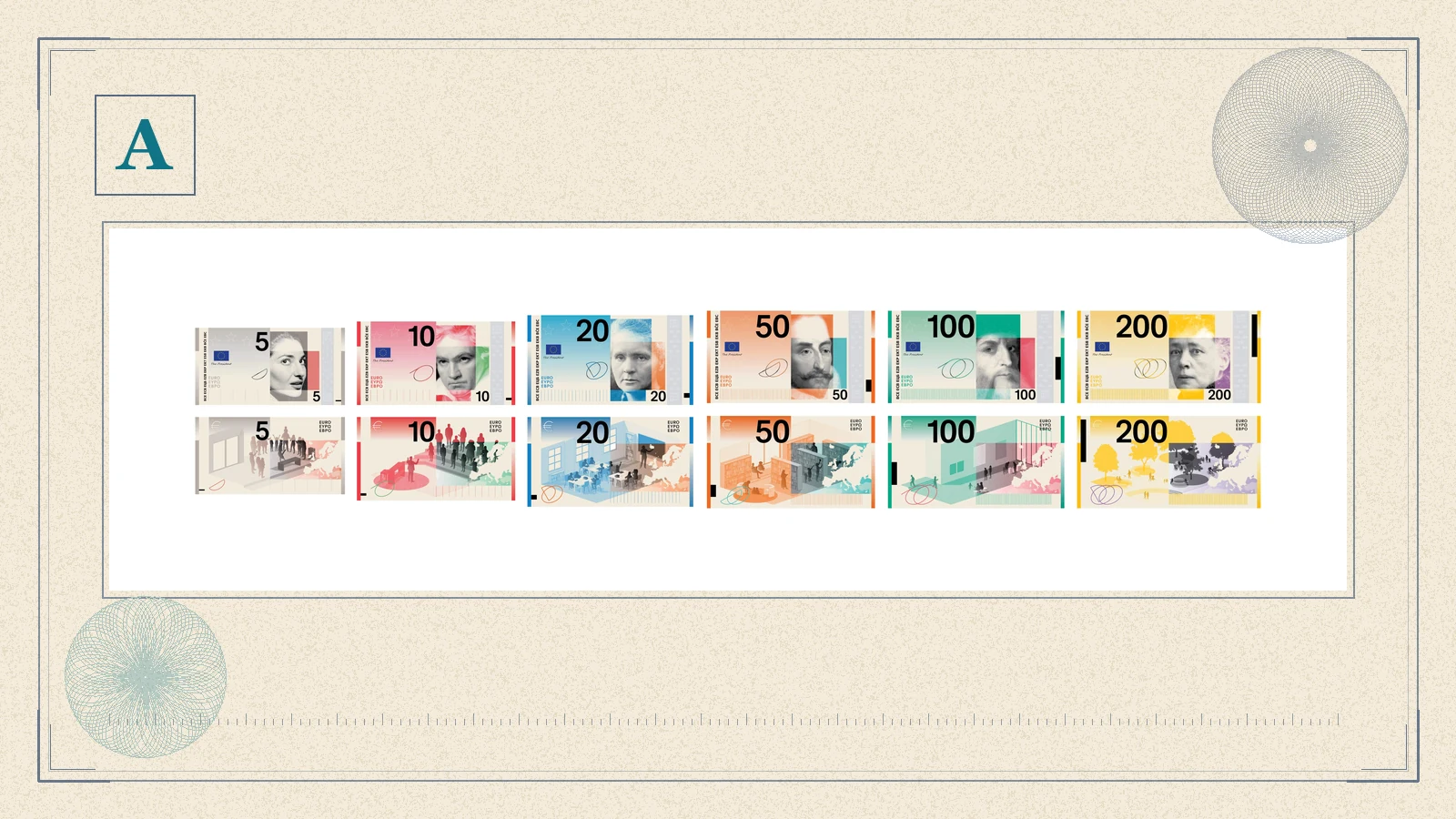
Design A — Studio Joost Grootens. Complete family of six denominations, fronts and reverses. Design proposal only: it does not show an issued or approved euro banknote.
Who they are
Joost Grootens, born in 1971, studied architectural design at the Gerrit Rietveld Academie in Amsterdam and is self-taught as a graphic designer. His studio, SJG, works from Amsterdam and Biel/Bienne on books, maps, typefaces, spatial installations and digital information environments, largely for publishers and museums.
The studio’s speciality is turning complex data into readable form. It has won the Golden Letter and two gold medals at Best Book Design from all over the World, and the Dutch Design Award for graphic design twice. Grootens holds a doctorate from Leiden University and has been appointed professor of artistic research in visual design at the Royal Danish Academy in Copenhagen.
What the proposal shows
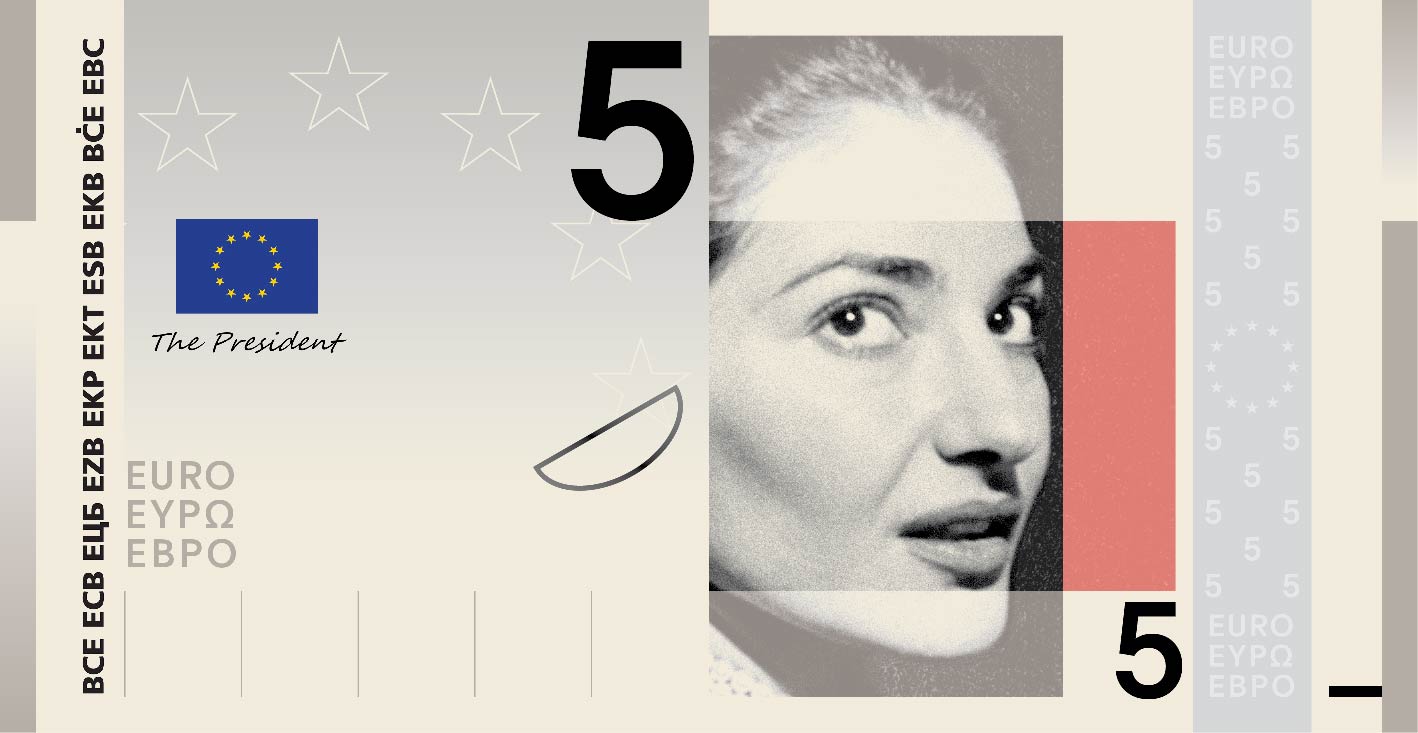
The proposal takes the six European culture motifs selected by the ECB in January 2025 — Maria Callas, Ludwig van Beethoven, Marie Curie, Miguel de Cervantes, Leonardo da Vinci and Bertha von Suttner — and crops each portrait tightly around the eyes and the mouth. The ECB describes the intention as connecting perception with expression: what a person observed and what they said.
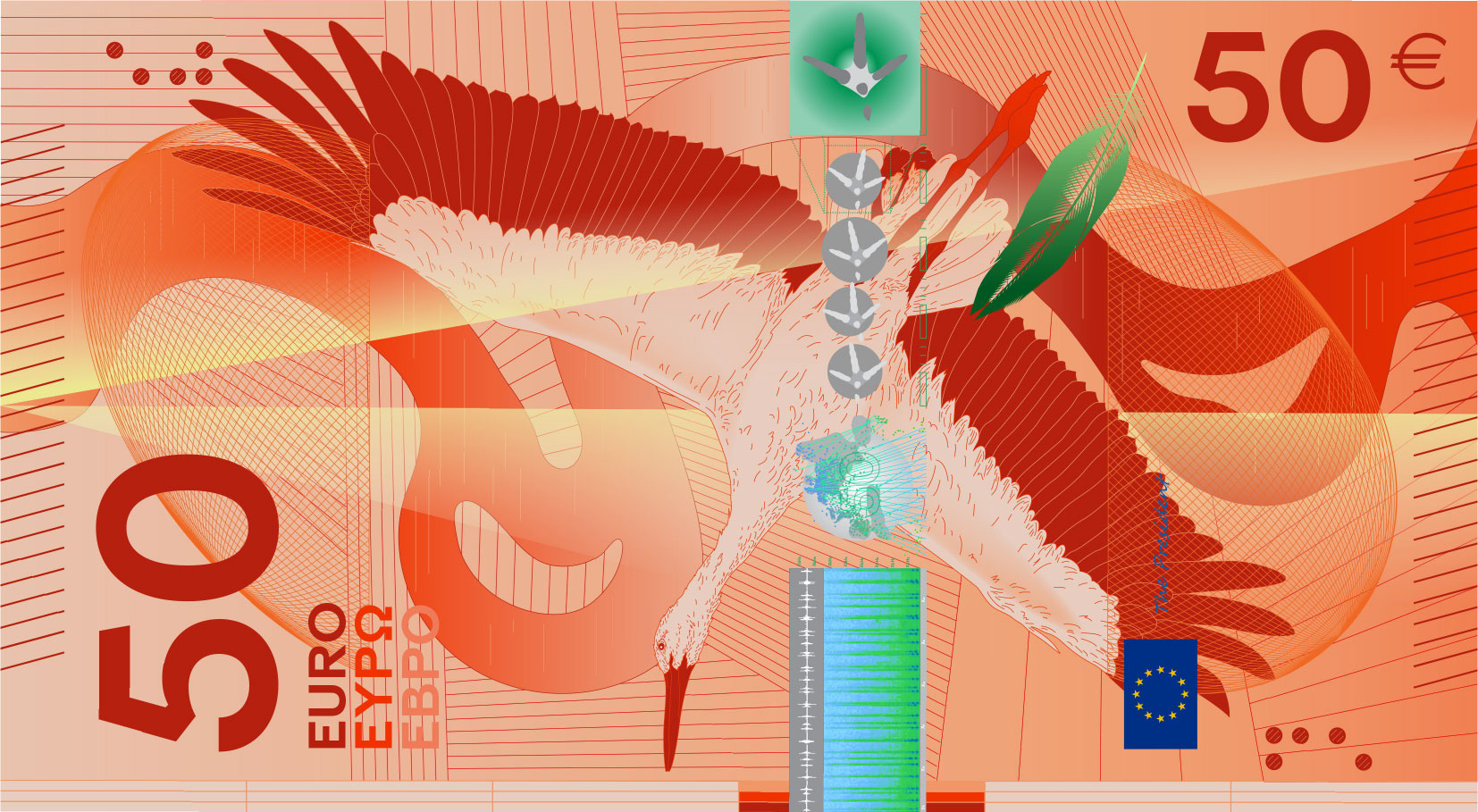
The reverses move to the present, showing contemporary cultural spaces with people of visibly different backgrounds using them together. Structured grids and flat colour fields hold the series together across denominations.
Where it sits in the process
Design A is a proposal, not an issued banknote. The ECB published it for a public survey that ran until 21 September 2026; the Governing Council is expected to choose one design around the end of 2026, weighing the jury’s conclusions, a technical assessment and the results of two surveys. Even after that choice, the winning family must be developed, tested and prepared for production before any note enters circulation.