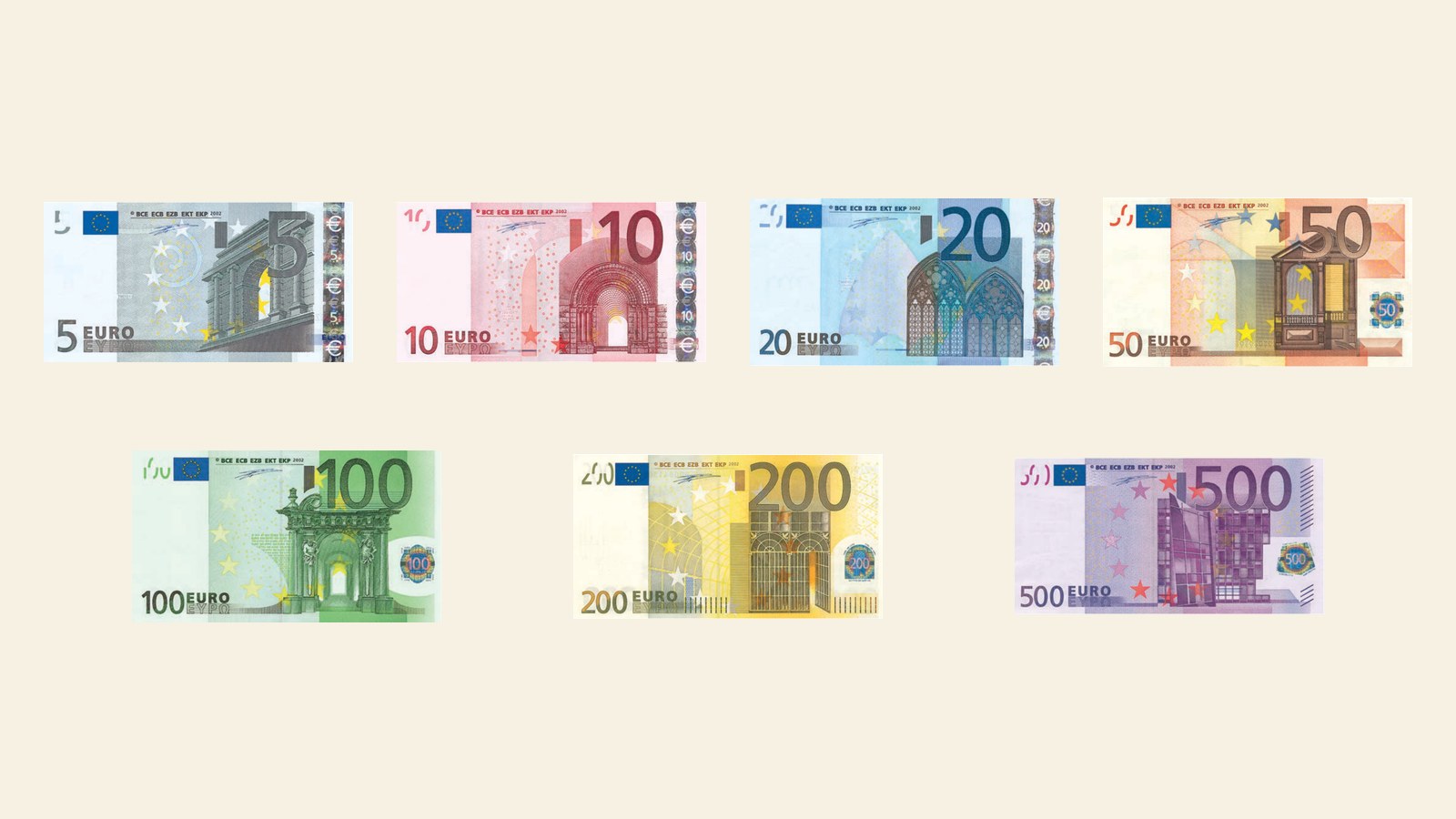
From today, citizens of twelve countries hold the same money. With 1 January 2002, euro banknotes and coins enter circulation, replacing within a few weeks national currencies used for generations, from the lira to the mark, from the franc to the peseta.


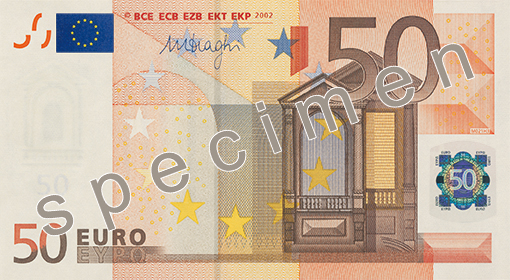


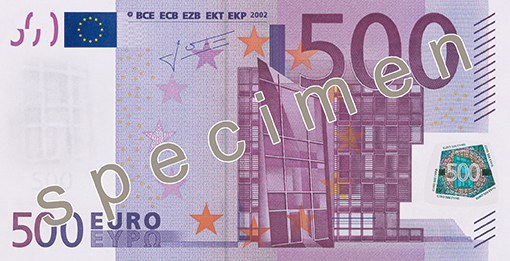
The seven denominations launched on 1 January 2002: one family of designs, one shared structure from 5 to 500 euro.
Seven banknote denominations begin to circulate: 5, 10, 20, 50, 100, 200 and 500 euro. Unlike the coins, which carry a national side, the banknotes share a single design across the whole euro area, built on the theme of windows, gateways and bridges from different European ages.
It is a graphic choice with a precise meaning. Windows and gateways suggest openness, bridges the cooperation between peoples; none of the buildings actually exists, precisely so as not to favour one country over another. The same logic explains the absence of recognisable faces and monuments.
The scale of the operation is enormous. Cash reaches more than three hundred million people at once, with billions of banknotes and coins distributed to counters, shops and households. For a few weeks the old currencies remain accepted alongside the euro, before being withdrawn from circulation entirely.
The logistical side is part of the story. Before the first day of circulation, central banks had to build stocks, supply commercial banks, prepare retailers and make cash machines ready to dispense the new notes. The launch was not only a monetary decision, but a physical distribution project on a continental scale.
The short dual-circulation period was designed to reduce uncertainty without letting two cash systems coexist for too long. People could spend the remaining national currency in daily life, receive euro cash as change and gradually learn the new denominations through ordinary transactions rather than through an abstract conversion table alone.
The changeover had been prepared for years. The euro had already existed since 1999 as the currency of financial markets and accounting; what was missing was the daily contact with cash. From today that contact begins, and with it the long practical coexistence of old prices and new ones.
The seven-note range also mattered symbolically. A currency introduced all at once has to feel complete from the first day: small notes for everyday purchases, large ones for higher-value transactions, and a clear colour and size progression that lets people orient themselves quickly at a glance.
That is why the launch cannot be reduced to a single denomination. What entered circulation was a full cash architecture, with each note playing a specific practical role inside the new common monetary space.
For anyone looking at the first series today, 2002 is also a useful reference point. The notes introduced that day established the common denominational structure, the shared architectural design and many of the collecting categories later used to read signatures, printer codes, country letters and circulation history.