From today, eleven European countries share a single currency. From 1 January 1999 the euro is the official money of Austria, Belgium, Finland, France, Germany, Ireland, Italy, Luxembourg, the Netherlands, Portugal and Spain. For now, though, it does not exist as cash: it lives in bank accounts, in financial markets and in accounting.

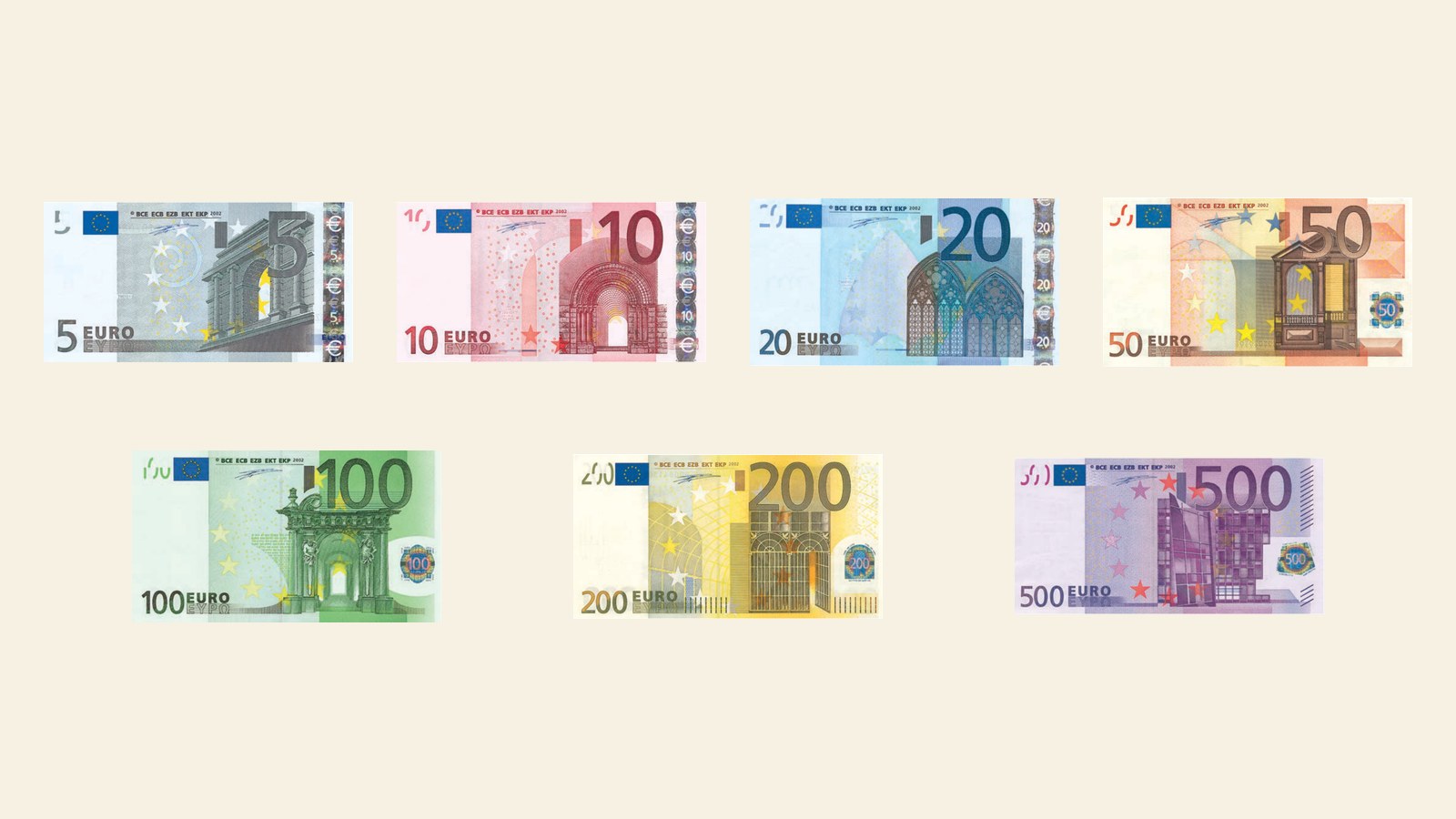
The first-series banknote design is already finished, but it will only enter circulation three years later, in 2002.
The banknotes and coins will come later. Until 1 January 2002 people keep using the lira, the mark, the franc, the peseta and the other national currencies; meanwhile the euro sets prices, contracts and exchange rates in a unit common to the whole area.
The changeover rests on irrevocable conversion rates. On 31 December 1998 the Council of the European Union sets, once and for all, how much each national currency is worth against the euro: 1,936.27 lire, 1.95583 marks, 6.55957 French francs to one euro. From that moment the exchange rates between these currencies no longer move.
Greece is not among the first eleven countries: it joins the euro area on 1 January 2001, still before cash arrives. When the banknotes begin to circulate, in 2002, the member states will be twelve.
This is why 1999 can be misunderstood if it is read only through the lens of banknotes. The euro exists fully as a currency from this date, but not yet as an everyday object. Monetary union begins as a legal, financial and accounting reality before it becomes something people can hold in a wallet.
The future banknotes, however, already belong to this moment. Their common structure, denominations and symbolic design language are part of the same monetary architecture being built now, even if the public will not meet the notes physically for another three years.
For anyone studying euro banknotes today, 1999 is the currency’s date of birth. The first series, the denominational structure and the shared graphic design take shape in these years; daily contact with paper money, however, will only begin three years later.