Slovakia adopts the euro on 1 January 2009 and becomes the sixteenth country in the euro area. The accession comes one year after Cyprus and Malta and continues the eastward enlargement of euro cash inside the European Union.

Slovakia enters the euro area while the first series is still the only euro banknote family in circulation.
The Slovak koruna is replaced at the irrevocably fixed rate of €1 = SKK 30.1260. As in earlier changeovers, a short dual-circulation period allows legacy cash and euro cash to coexist briefly, so the passage can happen through ordinary transactions rather than through an abrupt overnight disappearance of familiar money.
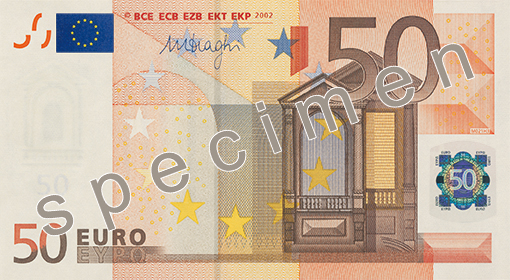
Because the Europa series has not started yet, Slovakia adopts the original first-series banknotes across the full range from 5 to 500 euro. That makes 2009 the last enlargement before the visual renewal of euro cash begins in 2013.
This timing gives the accession a particular place in banknote history. Slovakia does not just join the euro area; it joins at the end of the first-generation phase, when the original 2002 banknote family is still complete and still defines the common look of euro cash.
Institutionally, Národná banka Slovenska joins the Eurosystem and the country enters the common monetary framework at a moment of global financial tension. The accession therefore carries a double meaning: it is both a routine step in the euro’s territorial expansion and a sign that the common-currency project continues to enlarge even in a difficult international environment.
For the public, however, the visible message remains simple. The notes are not “Slovak versions” of the euro, but the same euro banknotes already circulating elsewhere. The change is one of monetary territory and legal status, not of iconography.
In the longer chronology, Slovakia marks the continuation of a pattern established after 2002: each enlargement brings the same banknotes to a new country, while the area of use expands step by step and the notes themselves remain a shared supranational object.