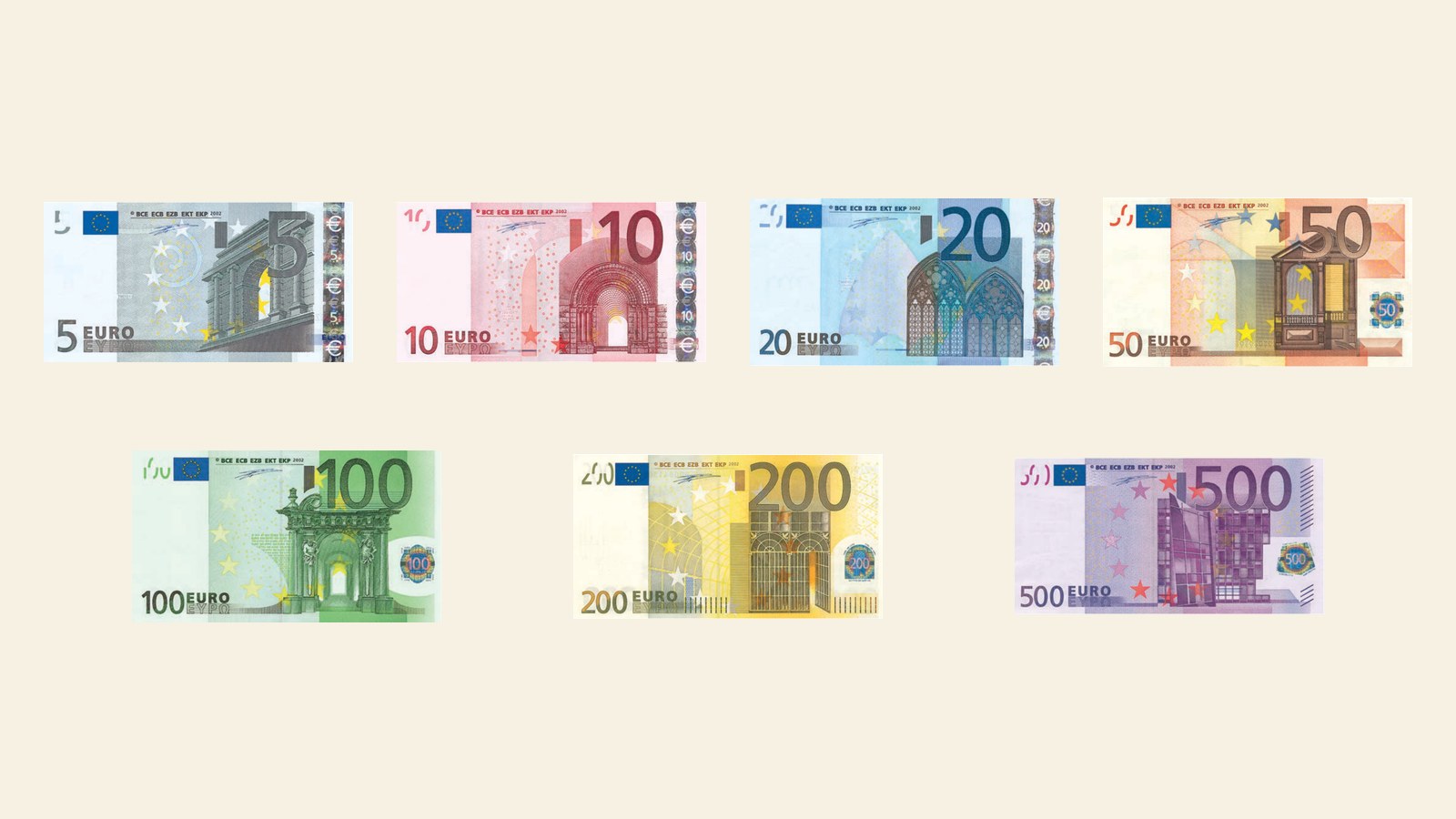
From 1 January 2026 the euro is the official currency of Bulgaria too. With its entry the euro area reaches twenty-one countries: Bulgaria is the most recent member and the latest state in which euro banknotes enter everyday use.

Bulgaria too puts the Europa-series banknotes into circulation, identical to those of the other countries.
The Bulgarian lev is replaced at the fixed rate of 1.95583 leva to one euro, the same value at which the currency had already been pegged to the euro for many years. As in the previous accessions, a short dual-circulation period accompanies the changeover, letting lev and euro coexist in the first weeks.
The Bulgarian National Bank joins the Eurosystem. The banknotes citizens begin to use are those of the Europa series, identical in design to those of the rest of the area: here too it is the geography of cash that changes, not the paper money.
Like Croatia before it, Bulgaria joins a euro area whose current cash family is already mature and fully recognisable. There is no rollout still under way to explain to the public, no denomination waiting to be introduced and no visual ambiguity about what the present banknote set is: the operative family is the Europa series from 5 to 200 euro.
The accession had been approved by the Council of the European Union on 8 July 2025, after the convergence criteria were assessed. Bulgaria thus becomes the twenty-first state of the euro area, and for now the most recent.
This makes the Bulgarian changeover different from the earlier enlargements of the 2000s and 2010s. Back then, new members entered a currency area that was still in the phase of the first series or in the middle of the redesign. Bulgaria enters after that transitional chapter has closed, so its adoption belongs to a more settled stage of euro-cash history.
The distinction between coins and banknotes again matters. Bulgaria introduces its own national coin sides, but its banknotes are the same common notes used everywhere else in the euro area. That split remains one of the clearest visual rules of the single currency.
For anyone following the evolution of euro banknotes, 2026 adds a new chapter to the same story that began in 1999: a currency born without cash, turned into paper in 2002 and since then extended, one country after another, to an ever-wider part of Europe.