Five years after cash arrived, the euro area grows for the first time. From 1 January 2007 Slovenia adopts the euro and becomes the thirteenth country to use it as official money. It is the first of the ten states that joined the European Union in 2004 to complete the changeover.

The same banknotes already in circulation since 2002 become everyday cash in Slovenia too.
The Slovenian tolar is replaced at the fixed rate of 239.640 tolars to one euro. For two weeks, from 1 to 14 January 2007, the two currencies circulate together: people can pay in tolars and receive euro as change, easing the changeover gradually.
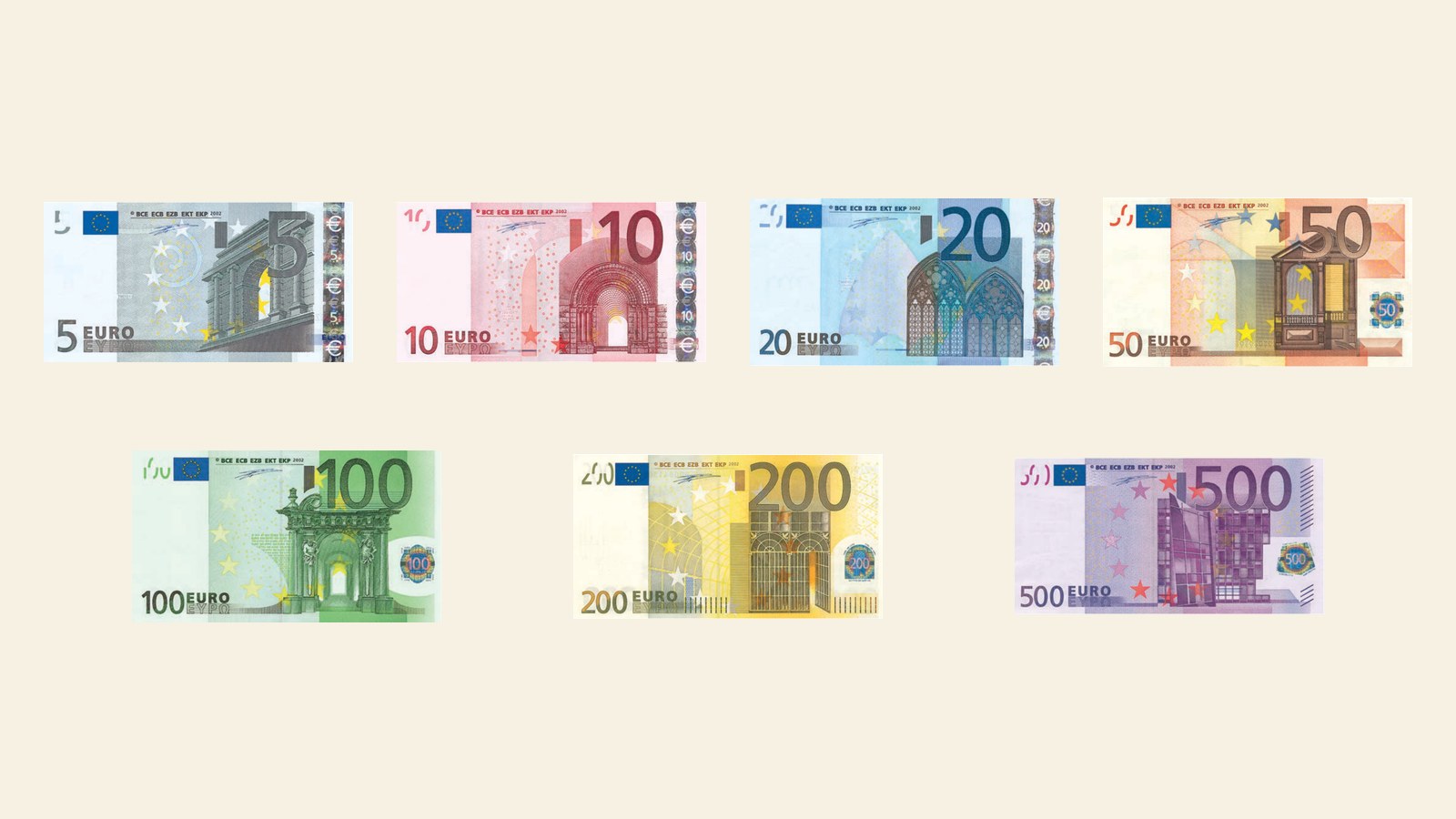
Nothing changes in the design of the banknotes. Slovenia adopts the same seven first-series denominations already used in the other countries: what changes is not the paper money but the geography of European cash, which from that day reaches a new state and a new national central bank, now part of the Eurosystem.
The accession had been approved by the Council of the European Union on 11 July 2006, after the convergence criteria were assessed. Slovenia thus opens the long sequence of enlargements that, in the following years, will bring the euro to other countries in central, Baltic and Mediterranean Europe.
Because this happens before the Europa series, Slovenia receives the full original family from 5 to 500 euro. That places the accession firmly inside the first-generation phase of euro cash, when the common banknotes are still exactly those launched in 2002.
Slovenia therefore matters not only as another country on the map, but as the point where the euro proves it can expand geographically without needing to redesign its cash identity. The same notes continue their life; only their area of use becomes larger.
For anyone watching circulation, 2007 marks the start of a new phase: euro banknotes stay identical in design, but their area of use grows one country at a time.